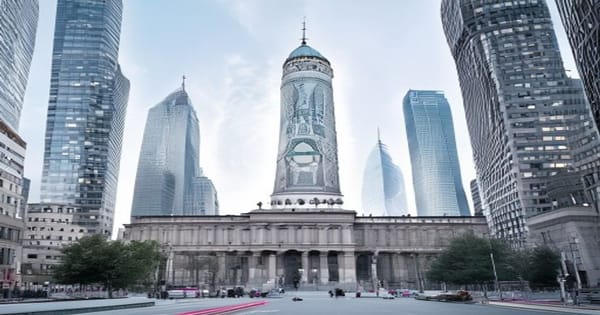
Historic Landmarks Speak: AI Unleashes Immersive Cultural Experiences in Metropolitan Monuments

The urban landscape, often a silent testament to centuries of human endeavor, is undergoing a revolutionary transformation. Through the groundbreaking application of artificial intelligence, metropolitan monuments are finding their voice, offering an unprecedented interactive experience that promises to redefine cultural tourism and historical engagement. This innovative initiative moves beyond static plaques and traditional audio guides, ushering in an era where the very stones of our cities can recount their stories, memories, and significance directly to visitors.
Imagine standing before an ancient statue or a venerable building, and with a simple tap on your smartphone, hearing its narrative unfold. This new AI-powered platform leverages sophisticated natural language processing and vast historical datasets to create compelling, personalized stories. Visitors can interact with these 'speaking monuments,' asking questions and receiving responses that delve into the monument's origins, its role in pivotal historical events, the lives of the people associated with it, or even its architectural nuances. The experience is designed to be dynamic, adapting to the user's interests and curiosity, making each encounter unique.
This innovative use of artificial intelligence transcends traditional guided tours by fostering a deeper, more emotional connection with our heritage. Instead of merely observing, visitors become active participants in a historical dialogue. For instance, a war memorial might share the poignant stories of those it commemorates, while a historic market square could recount the bustling daily life and pivotal trade negotiations that once took place there. This personalized approach makes history more accessible and engaging for all ages, from school children on educational trips to seasoned historians seeking new perspectives.
The technology behind this phenomenon is a marvel of modern engineering. Combining machine learning algorithms with extensive archives of historical documents, photographs, and oral histories, the AI synthesizes information into coherent, natural-sounding narratives. Users might access these stories through dedicated mobile applications, QR codes placed at sites, or even augmented reality interfaces that overlay historical figures or events onto the present-day landscape. The goal is to make the past feel tangible, immediate, and intimately connected to the present.
The implications for cultural preservation and tourism are profound. By making history come alive, cities can attract a new generation of visitors who seek immersive and interactive learning experiences. It also serves as a powerful tool for education, offering a rich, multimedia learning environment outside the classroom. Furthermore, this initiative can highlight lesser-known aspects of a city's heritage, bringing attention and appreciation to monuments that might otherwise be overlooked.
As cities continue to embrace smart technologies, the idea of a 'speaking city' becomes less of a futuristic fantasy and more of a tangible reality. This AI-driven revolution in cultural heritage promises to transform our interaction with historical landmarks, offering not just information, but an enduring personal connection to the past. It's an exciting glimpse into a future where every monument has a voice, ready to share its secrets with those who stop to listen.
This Article is Sponsored By:AltShift: Video Editor for Hire Graphic Designer for Hire
RShift Marketing: Digital Marketing in Rossford, Ohio & Social Media Marketing in Rossford, Ohio
See more articles from our network:
- Historic Landmarks Speak: AI Unleashes Immersive Cultural Experiences in Metropolitan Monuments
- AI-Driven Monument Narratives: An Architectural Overview
- Open-Source Collaboration for Historic Voices
- Hear History! AI Makes Monuments Talk!
- Chatting with Ancient Stones: AI Brings Monuments to Life
- Engineering Conversational History with AI